How to prepare for a heart ultrasound
Echocardiography (ultrasound of the heart) is a completely painless, non-invasive, and safe diagnostic method. Using ultrasound waves, a cardiologist obtains a detailed insight into the structure of your heart, the appearance of heart valves, the dimensions of the heart chambers, and the strength of the heart muscle.
Am I allowed to eat and drink before the examination?
Food and drinks: You can freely eat and drink water before a standard (transthoracic) echocardiogram. We advise avoiding overly heavy meals right before the examination so that lying on your left side does not cause discomfort.
Caffeine and nicotine: Try to avoid coffee, energy drinks, strong teas, and cigarettes at least 2 hours before your scheduled appointment. These substances can temporarily accelerate your heart rate or raise your blood pressure, which may affect certain parameters during measurement.
What about my regular therapy?
Do not skip your medication: Take all your regular medications (especially those for high blood pressure, arrhythmias, or chronic illnesses) exactly as prescribed by your doctor, with a little water.
Inform the cardiologist: Before the examination begins, make sure to tell the doctor exactly which medications you take and in what dosages.
How should I dress for the examination?
Two-piece clothing: For an ultrasound of the heart, you will need to undress from the waist up. Therefore, it is most practical to wear a T-shirt or a shirt that you can easily remove, combined with pants or a skirt. Avoid one-piece dresses or jumpsuits.
Jewelry: It is recommended to remove necklaces and long chains before the examination so they do not interfere with the cardiologist while moving the ultrasound probe across your chest.
What documentation should I bring?
For the cardiologist to have a complete insight into your health condition, please make sure to bring:
- Previous cardiological reports (if you have them).
- Results of prior echocardiograms for comparison (the so-called tracking of disease dynamics).
- The latest ECG recording and laboratory blood test results (if done within the last month).
- A list of medications you are currently taking.
Arrive a bit early and rest
Avoid rushing: Arrive at the clinic 10 to 15 minutes before your scheduled appointment.
Calm your pulse: If you walked fast or climbed the stairs, your pulse and blood pressure will be elevated. Sit in the waiting room for a few minutes to let your heart return to its natural, calm rhythm before lying down on the examination bed.
How long does the examination last and what to expect?
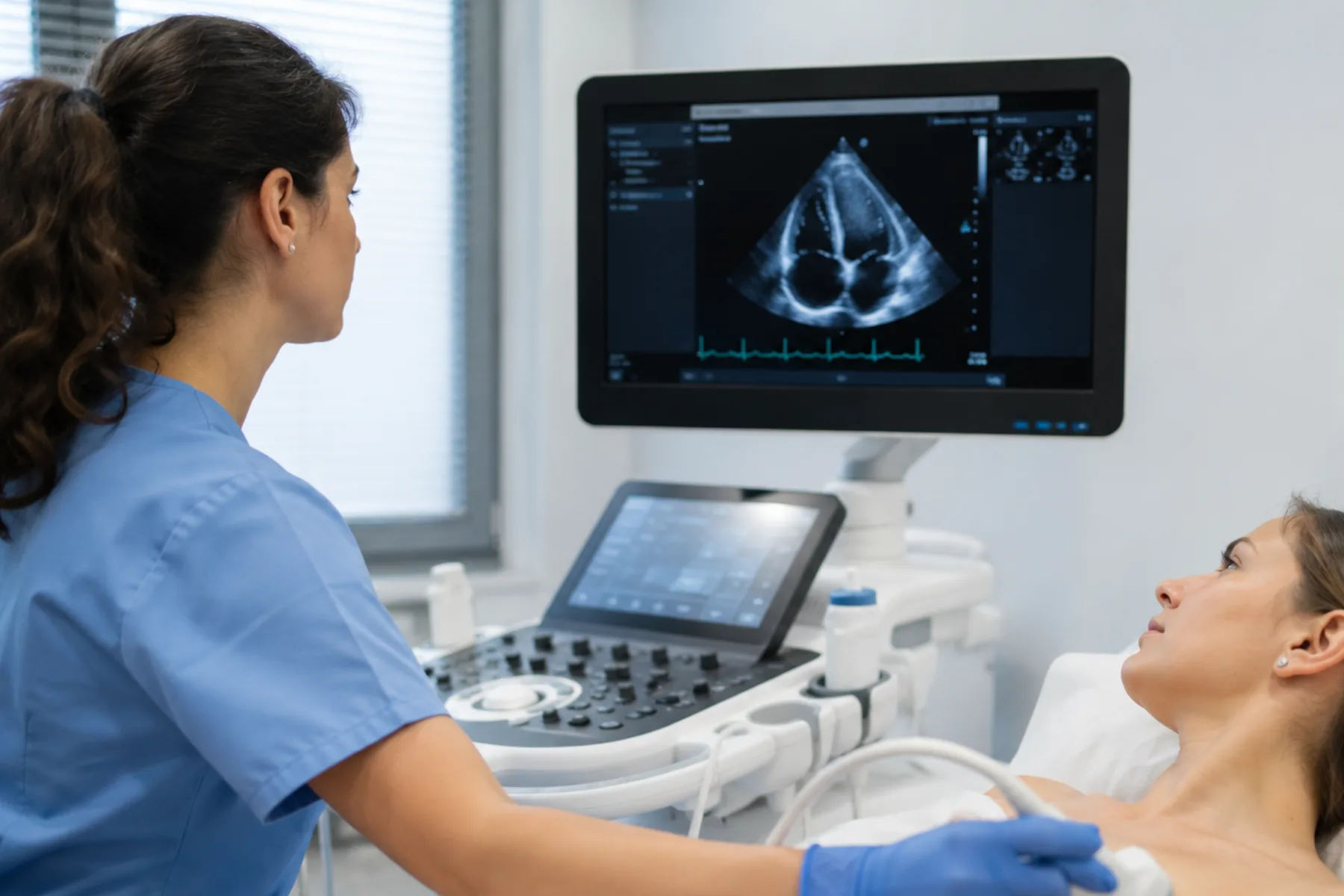
The examination itself lasts between 20 and 30 minutes. The doctor will apply a small amount of clear, water-based gel to your chest (the gel helps improve the conductivity of ultrasound waves). During the examination, you will mostly lie on your left side with your left hand placed under your head, and the doctor will move the probe across your chest using gentle pressure. The examination is completely harmless, involves no radiation, and you can return to your usual daily activities immediately afterward.
Your heart deserves the best care. If you have additional questions or wish to schedule your appointment, our team of cardiologists in Belgrade is at your disposal.